

5 Ways Pickling Shaped World Cuisines
Pickling, a preservation method dating back to 2400 BCE, has influenced food across the globe. By creating an acidic environment, it not only extended the shelf life of seasonal produce but also introduced bold flavors that shaped culinary traditions. From Korean kimchi to Indian achar, pickling has adapted to local climates, ingredients, and tastes, becoming a staple in many cuisines. Exploration and trade further spread these techniques, inspiring regional recipes and spice blends. Today, chefs and home cooks alike use pickling to enhance dishes, reduce waste, and preserve seasonal ingredients. Its journey from necessity to culinary art highlights its lasting impact on global food culture.
The Evolution of Pickling: From 2400 BCE to Modern Cuisine
A Short History of Pickles, Vinegar and Fermentation
sbb-itb-820fb79
1. Food Preservation Enabled Year-Round Cooking
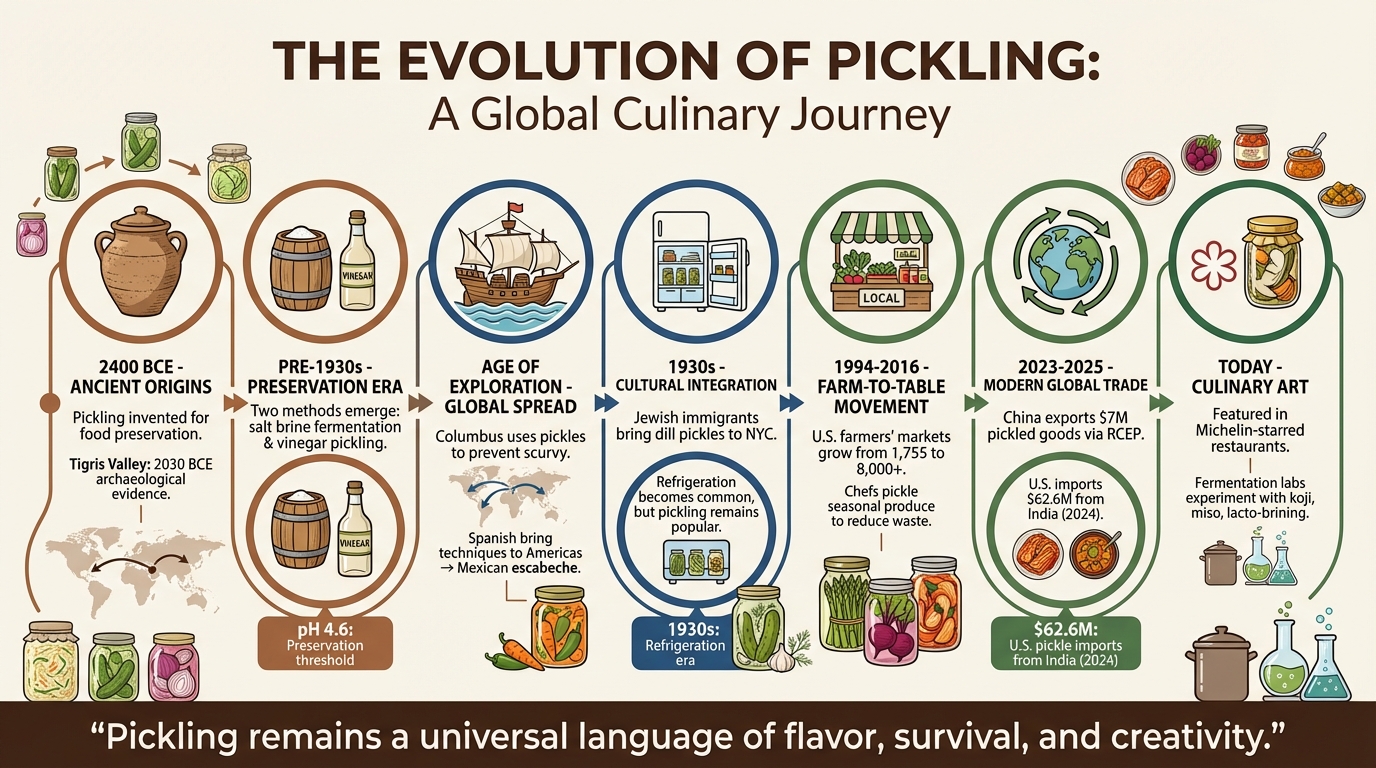
Before the days of modern refrigeration, pickling was a game-changer for food preservation, shaping culinary traditions across the globe. Refrigerators only became common in the 1930s, leaving earlier communities to battle food spoilage. Pickling offered a solution by halting the growth of bacteria and enzymes. By maintaining a pH of 4.6 or lower - achieved through vinegar or natural fermentation with salt - foods could be preserved effectively.
This technique transformed how societies managed their food supplies, especially in areas with harsh winters like Eastern Europe, Russia, and parts of North America. During warmer months, families would pickle vegetables and proteins to ensure they had nutritious food throughout winter. Archaeological evidence from the Tigris Valley, dating back to 2030 BCE, highlights how advanced this preservation method was.
Two main methods of pickling emerged: anaerobic fermentation in salt brine and acidic immersion in vinegar. Fermentation works by drawing out moisture with salt, allowing beneficial bacteria like Leuconostoc mesenteroides and Lactobacillus plantarum to produce lactic acid. Vinegar pickling, on the other hand, uses acidic solutions for faster results.
Beyond preservation, pickling helped retain essential nutrients. Fermented foods maintained B vitamins and Vitamin C, which were vital when fresh produce wasn’t available. For example, Christopher Columbus stocked pickled foods on his voyages to prevent scurvy among his crew.
To store their pickled goods, communities used large earthen jars, clay pots, or buried them underground to maintain cool temperatures. This extended the shelf life of seasonal harvests for months or even years. Over time, these practices became deeply ingrained in traditions. Jewish communities in 19th-century Europe relied heavily on pickles as a dietary staple, while South Asian cultures preserved mangoes and chilies in oil and salt.
These early preservation techniques not only ensured survival but also laid the groundwork for fermentation methods that would later define regional cuisines.
2. Regional Fermentation Methods Defined National Cuisines
As pickling spread worldwide, each region adapted the process to fit its local climate, ingredients, and taste preferences. These tweaks didn’t just preserve food - they helped define national identities. Cooler climates often created sharper, tangier flavors, while warmer areas leaned toward milder, creamier profiles influenced by temperature differences. These adaptations laid the foundation for diverse culinary traditions.
Take Korea's kimchi, for instance. This iconic dish, made from napa cabbage fermented with chili, garlic, ginger, and anchovy sauce, is a staple at nearly every Korean meal, prized for its probiotic benefits. On the other hand, Germany's sauerkraut keeps it simple with shredded cabbage and salt, occasionally spiced with caraway seeds. Both rely on fermented cabbage, but their flavors and preparation reflect entirely different culinary philosophies. Meanwhile, India's achar is a testament to the country's love for spices. This pickle combines mustard oil, salt, fenugreek, and turmeric with seasonal ingredients like mango and lime. Often prepared as a family activity, achar recipes are passed down through generations and stored in traditional ceramic jars called martabans.
Geography also played a major role in shaping pickling methods. Coastal areas like Scandinavia and the Philippines developed techniques to preserve fish and seafood. For example, Scandinavians pickle herring in a mix of vinegar and sugar, making it a regional staple. In Rajasthan, India, where fresh produce is scarce, locals turned to pickling dried desert berries (ker) and beans (sangri). Tropical regions, rich in seasonal fruits, gave rise to creations like Filipino atchara, made from green papaya pickled in vinegar, and Japanese umeboshi, where plums are salt-cured and sun-dried.
These regional innovations didn’t just preserve food - they became cultural symbols and culinary traditions.
"I have searched - without success - for examples of cultures that do not incorporate any form of [lactic acid] fermentation. Indeed, ferments are central features of many, perhaps even most, cuisines." - Sandor Katz, Author of The Art of Fermentation
Over time, these methods grew into more than just practical techniques; they became cultural anchors, connecting people to their heritage. In Burma, for example, pickled tea leaves (lahpet) are a centerpiece at gatherings and ceremonies. In Russia and Ukraine, leftover pickle brine (rassol) is a key ingredient in traditional soups like shchi and solyanka. Each region’s approach to fermentation created distinct flavors, making pickled foods indispensable to their national cuisines.
3. Global Trade Spread Pickling Techniques Worldwide
Merchants and explorers played a crucial role in spreading preservation methods, particularly pickling, which has left a lasting impact on cuisines across the globe. During the Age of Exploration, pickling became essential for long sea voyages, ensuring food remained edible for extended journeys. This necessity helped transform pickling into a global practice, setting the stage for its integration into modern trade and culinary traditions.
Vinegar-based pickling has ancient roots, originating thousands of years ago and spreading through regions like the Middle East, the Maghreb, Sicily, and Spain. When Spanish explorers reached the Americas, they brought these techniques with them, which evolved into localized favorites such as Mexican escabeche - a mix of pickled chilies and vegetables that became a cornerstone of Latin American cuisine. Similarly, English settlers introduced their own version of pickling, crafting "sweet pickles" by combining vinegar, sugar, and spices like cinnamon, allspice, and cloves. By the 1930s, Jewish immigrants from Eastern Europe brought salt-brine fermented dill pickles to New York City, leaving a lasting influence on American food culture.
In recent years, modern trade agreements have further accelerated the global exchange of pickling traditions. For instance, the Regional Comprehensive Economic Partnership (RCEP) has reduced tariffs and simplified customs processes, making it easier to export pickled goods from Asia to other parts of the world. A notable example is the Lvling Pickle-Making Company in Fuling, China, which exported 50 million yuan (about $7 million) worth of pickled mustard tubers to RCEP countries during the first three quarters of 2023. This represented a 5% year-on-year growth, with shipping times reduced to just one week, ensuring fresher products. The United States has also become a significant importer of Asian pickles, purchasing $62.6 million worth from India in 2024, with Vietnam and India contributing an additional $10.61 million in combined trade value between 2024 and 2025. Today, pickled specialties like kimchi, tsukemono, and achar have transcended their traditional roots to feature in Michelin-starred restaurants and home kitchens, enhancing dishes like ramen and bao buns with their rich umami flavors.
Trade networks didn’t just spread pickling techniques - they also carried the spices that define regional pickles. Mustard seeds, cloves, and cinnamon traveled along these routes, bringing their antimicrobial qualities to preservation methods while inspiring bold and diverse flavors. This ongoing exchange of ingredients and techniques continues to reshape global cuisines, echoing the ancient traditions of culinary innovation.
4. Spice and Ingredient Combinations Created New Flavors
Pickling shines when spices, herbs, and aromatics come together to shape distinct culinary traditions. Around the world, regions have developed their own signature blends that define their pickling styles. For example, Indian achar relies on mustard oil, fenugreek, and asafoetida to create bold, fiery condiments from mangoes and limes. In Eastern Europe, pickles often feature horseradish, garlic, and juniper berries, lending an earthy depth to cabbage and mushrooms. The Middle East incorporates sumac and za'atar into vegetable brines, while Southeast Asian recipes pair bird's eye chilies with shallots and ginger for a vibrant, spicy kick.
These combinations do more than add flavor - they also help preserve the food. Ingredients like mustard seed, garlic, cinnamon, and cloves not only enhance taste but also offer natural antimicrobial properties, which inhibit the growth of harmful microbes. Food historian Eliza Acton once described pickling as a "delightful science", a process that layers sweet, sour, salty, pungent, and umami flavors to create complex profiles that can elevate dishes like sandwiches and stews. These traditional blends laid the groundwork for modern creativity in pickling.
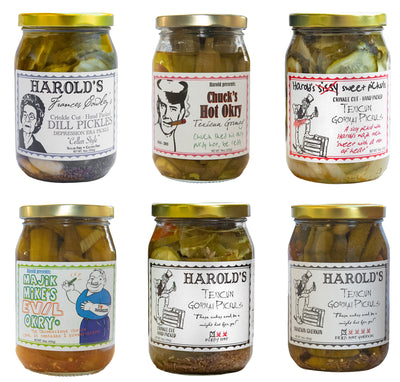
Today, producers are reimagining these age-old techniques. Harold's Pickles, a Texas-based company, stands out with inventive products like The Original Beer Pickle, which combines beer and garlic for a one-of-a-kind flavor. Their Texicun Gormay Pickuls offer hot, spicy gourmet options, while Chuck's Hot Okry gives a fiery twist to Southern-style pickled okra. These examples show how even simple ingredients can be transformed into bold, unforgettable flavors.
This spirit of innovation continues to inspire chefs and home cooks alike. From kimchi-infused cucumbers to unexpected ingredients like fiddlehead ferns and green strawberries, pickling bridges the gap between tradition and creativity. As fermentation expert Sandor Ellix Katz puts it, pickling connects the ancient with the modern, blending time-honored methods with fresh ideas to create entirely new culinary experiences.
5. Modern Chefs Use Pickling to Add Depth to Dishes
Pickling has come a long way from its origins as a preservation method, evolving into a culinary art that adds vibrant acidity to balance rich, indulgent flavors. Today’s chefs use pickling to create dishes that are both complex and refreshing, with the tangy kick of pickled ingredients cutting through the richness of fats, creams, and slow-cooked meats. This sharp contrast doesn't just enhance flavor - it transforms it, awakening the palate with every bite.
On gourmet menus, pickled items like grapes, mustard seeds, preserved lemons, shallots, fennel, and even strawberries are becoming staples, each bringing its unique twist to the table. Take pickled mustard seeds, for instance. Often dubbed “acidic caviar,” these tiny pearls pack a glossy, tangy punch that elevates even the simplest of dishes.
"Acidity is energy. It's brightness you can taste. It wakes up the entire mouth." - Chef Jiwoo Park
The farm-to-table movement has also embraced pickling, not just for its flavor-enhancing properties but as a way to preserve seasonal produce and reduce waste. With U.S. farmers' markets growing from about 1,755 in 1994 to over 8,000 by 2016, chefs are pickling surplus ingredients to ensure they last through the off-season. This practice ties sustainability with creativity, allowing chefs to maintain a steady supply of vibrant ingredients even in the colder months.
In cutting-edge kitchens, fermentation labs have become a hub for experimenting with advanced techniques like koji, miso, and lacto-brining. These methods add layers of flavor that are far more intricate than simple sourness. Food scientist Elina Rocha captures this beautifully:
"Fermented foods have depth. It's not just sour. It's fruity, funky, savory, and floral all at once - like a chord with many notes." - Elina Rocha
Even home cooks can join the pickling movement. With just a jar, some salt, water, and seasonings, anyone can ferment surplus vegetables to reduce waste while adding bold flavors to their meals. Pickling seamlessly bridges the gap between tradition and modern culinary practices, proving that ancient techniques still hold a vital place in today’s kitchens. It’s a perfect example of how chefs continue to innovate while honoring the past.
Conclusion
Pickling has come a long way from its humble beginnings as a method to preserve food. Archaeologists trace its origins back to 2030 BCE in the Tigris Valley, where it served as a practical solution for food storage. Over the centuries, what started as a survival technique has blossomed into a culinary craft that even finds its place in Michelin-starred kitchens.
This practice has played a key role in shaping regional cuisines. Think of dishes like Korean kimchi, German sauerkraut, Indian achar, or Mexican escabeche - each one reflects local traditions, distinctive spices, and native ingredients. As global trade and exploration expanded, these pickling techniques crossed borders, creating a shared appreciation for bold, tangy flavors.
"Pickling remains a universal language of flavor, survival, and creativity." – pekis.net
Today, pickling continues to evolve while staying rooted in tradition. Chefs use pickled ingredients to bring complexity and brightness to their dishes, and home cooks rely on them to cut down on food waste and preserve seasonal produce. Beyond flavor, pickling offers health benefits, like fermentation-produced B vitamins. Whether it’s enhancing nutrition or balancing rich dishes with a sharp, acidic edge, pickling’s journey from a preservation tool to a flavor powerhouse highlights its lasting influence on global cuisine.
FAQs
What’s the difference between vinegar pickling and fermented pickling?
Vinegar pickling involves using acetic acid, such as vinegar, to create an acidic environment that halts bacterial growth. This method is quick and gives the food a sharp, tangy taste. In contrast, fermented pickling depends on natural bacteria to gradually transform sugars into lactic acid. This process not only results in a tangy, complex flavor but also produces a product rich in probiotics and boosts the food's nutritional value.
Is pickled food safe if I make it at home?
Yes, making pickled food at home can be safe as long as you follow the right steps. Stick to tested recipes and ensure the acidity levels are correct to avoid serious risks like botulism. Always prioritize safety by adhering to trusted guidelines and detailed instructions.
How do chefs use pickles to make dishes taste better?
Chefs incorporate pickles into dishes to bring tangy, bold flavors, thanks to their acidity and spices. Beyond flavor, pickles add a satisfying texture, making meals more dynamic and enjoyable.
Leave a comment