

Southern Pickle Spices for Beer Pickles
Beer pickles combine the tang of vinegar with the malty, hoppy notes of beer, creating a rich and flavorful twist on classic pickles. Southern pickle spices elevate this further with bold ingredients like mustard seeds, garlic, and red pepper flakes. By swapping water for pale ale or wheat beer, the brine gains depth and balance, softening the vinegar's sharpness while letting the spice blend shine. Key steps include:
- Core spices: Mustard seeds, black peppercorns, dill seeds, garlic, and bay leaves form the base.
- Optional warm spices: Cinnamon sticks, allspice berries, and cloves add complexity.
- Beer brine ratio: Combine vinegar, beer, water, sugar, and salt for the perfect balance.
- Spice blends: Choose from dill-forward, spicy Cajun, or warm sweet-spice variations.
Start by layering spices and cucumbers in jars, pour over the brine, and let steep for 2–4 weeks for the best flavor. Whole spices are recommended for a clean, gradual infusion. Customize heat, sweetness, or depth to suit your taste. Whether tangy, spicy, or aromatic, beer pickles are a flavorful Southern favorite.
Beer Brined Pickles - what could be better? #recipe #pickles #easyrecipe
sbb-itb-820fb79
Southern Spice Blend Basics
A Southern spice blend isn’t just a random mix of ingredients - it’s a carefully crafted combination where every spice has a purpose. Knowing what each spice brings to the table helps you create a blend that balances tang, heat, and depth perfectly. This foundation is key to making precise blends that elevate beer pickle brines.
Core Ingredients for Southern Pickle Spices
The heart of any Southern-style pickle blend relies on a few essential spices. Mustard seeds bring a sharp, tangy kick that gives Southern pickles their signature "bite." Dill seeds add a grassy, slightly bitter freshness that anchors dill-forward recipes. Coriander seeds contribute a mild citrusy warmth with floral undertones, balancing out the savory flavors. Black peppercorns provide a bold, peppery heat - cracking them coarsely before use helps release their flavors faster.
Garlic is a must for its strong, savory punch, especially in Southern or Texas-style pickling. Bay leaves offer a subtle herbal depth with faint floral notes, while red pepper flakes deliver the heat - bright, fiery, and unmistakably Southern.
A good starting ratio: use equal parts mustard seeds, coriander seeds, and black peppercorns as your base. Adjust the garlic and red pepper flakes depending on how much heat or boldness you want. For consistent flavor, add about 2–3 tablespoons of the finished blend to each 32-ounce jar.
Here’s a tip: stick to whole spices instead of ground ones. Whole seeds and berries hold up better in a vinegar-and-beer brine, releasing their flavors gradually during steeping rather than all at once. A quick crush with a mortar and pestle is enough to unlock their essential oils without losing that slow, layered infusion.
Optional Warm Spices for Added Depth
Once you’ve nailed the core blend, warm spices let you add your own flair. Allspice berries are a great addition - they deliver a mix of cinnamon, clove, and nutmeg flavors, adding complexity without overpowering. Cinnamon sticks soften the sharpness of a vinegar-heavy brine with their woody sweetness. Whole cloves, on the other hand, pack a rich, intense punch but should be used sparingly to avoid overwhelming the mix.
| Warm Spice | Flavor Profile | Ideal For |
|---|---|---|
| Allspice Berries | Sweet, warming, complex | Adding depth without one flavor dominating |
| Cinnamon Sticks | Woody, sweet | Softening strong vinegar brines |
| Whole Cloves | Rich, pungent, intense | Adding bold aromatics - use sparingly |
| Star Anise | Licorice-like, sweet-spicy | Bringing a unique, slightly exotic complexity |
| Dried Ginger | Sharp, zesty, warm | Adding a warm, zesty "zing" to the flavor profile |
Just like with the core spices, whole versions of warm spices are the way to go. Ground spices like cinnamon or clove can cloud your brine and release their flavors too quickly. Whole spices allow for a more controlled and gradual infusion. Store any leftover blend in an airtight container in a cool, dark spot, and it’ll stay fresh for 12 to 24 months. Up next, see how these blends work their magic in a beer pickle brine.
How to Make a Beer Pickle Brine
Creating a beer pickle brine is all about striking the right balance between acidity, sweetness, and the unique flavor that beer brings to the table. Each ingredient plays a key role in achieving this harmony.
How Beer Affects the Brine
Beer doesn’t just replace water in the brine - it transforms the flavor profile. It contributes maltiness, a touch of hop bitterness, and subtle yeast notes that vinegar alone can’t achieve. Pale ales are a go-to option due to their balanced hop character, while medium- to full-bodied beers like Anchor Steam add a rich, malty depth, giving the pickles a savory, bread-like quality. Brooklyn Brew Shop captures the versatility of beer in pickling with this comment:
"The bad boys pictured at right were made with pale ale, but since people are willing to use Kool-Aid to make pickles, we're pretty sure that any kind of beer will work." - Brooklyn Brew Shop
To intensify the beer’s flavor, simmer it for about 15 minutes to reduce it by one-third. This step concentrates the malt and hop notes, ensuring they stand out even against the vinegar’s sharpness. Just keep in mind that beer tends to foam when heated, so use a larger saucepan to avoid overflow.
Once the beer is prepped, it’s time to combine it with the other ingredients in just the right proportions.
Brine Ingredients and Ratios
For 3 pounds of pickling cucumbers, start with the following ratio:
- 2 cups distilled white vinegar: Delivers clean, sharp acidity.
- 12 oz beer: Adds maltiness, hop bitterness, and depth.
- ¼ cup water: Slightly softens the vinegar’s acidity.
- 1 cup sugar: Balances out the sharpness of the vinegar and bitterness of the hops.
- 1 tablespoon pickling or kosher salt: Preserves the cucumbers’ texture and enhances flavor (avoid iodized salt, as it can make the brine cloudy).
| Ingredient | Amount | Purpose |
|---|---|---|
| Distilled White Vinegar | 2 cups | Provides tang, acidity, and preservation |
| Beer (Pale Ale or Medium/Full-Bodied) | 12 oz | Adds malt, hop flavor, and complexity |
| Water | ¼ cup | Balances acidity |
| Sugar | 1 cup | Sweetens and balances bitter flavors |
| Pickling or Kosher Salt | 1 tbsp | Enhances flavor and maintains texture |
To make the brine, heat the vinegar, beer, water, sugar, and salt over medium-high heat, stirring until the sugar and salt dissolve. Once dissolved, lower the heat and avoid boiling the brine before pouring it over the cucumbers. Using boiling brine can soften the cucumbers too quickly, which might ruin their crunch.
3 Southern Spice Blend Variations for Beer Pickles
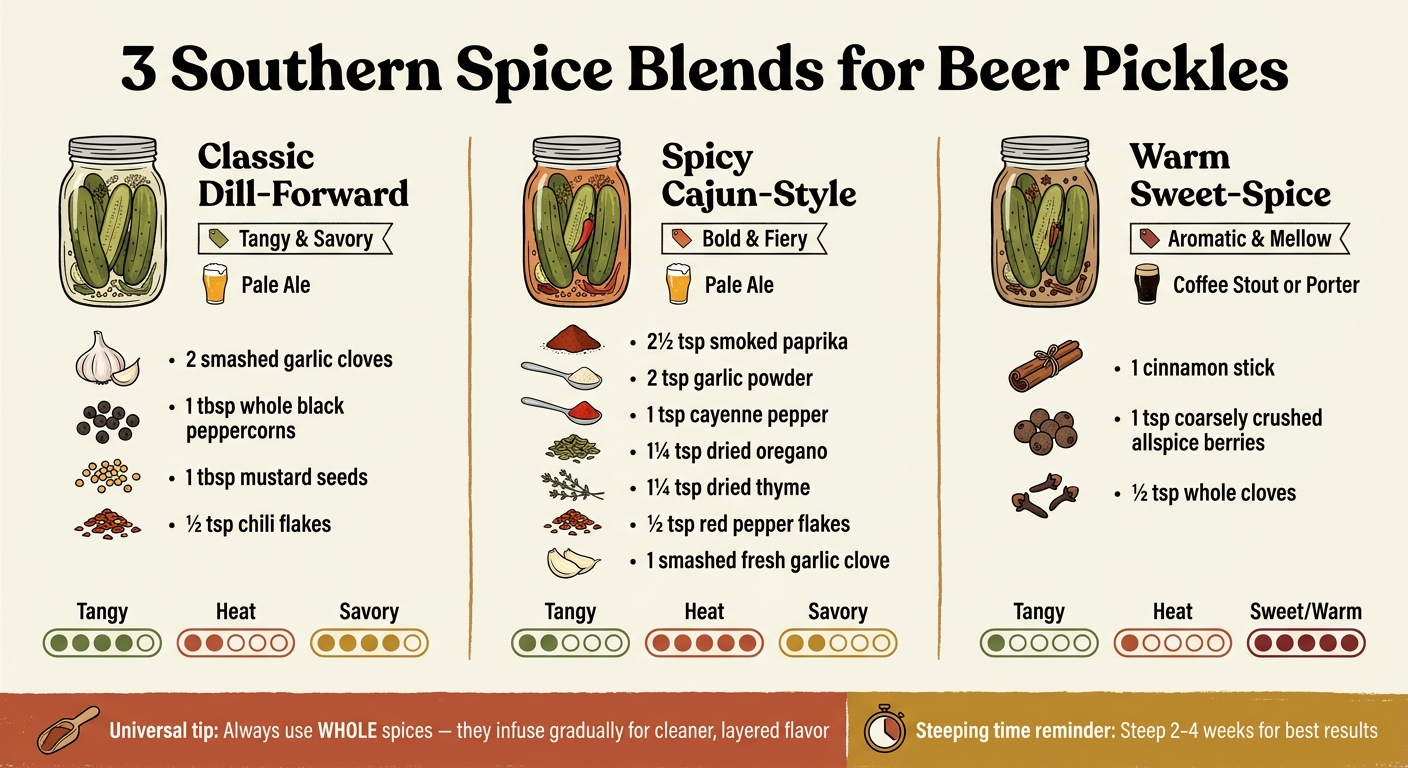
3 Southern Spice Blends for Beer Pickles: Side-by-Side Guide
The spice blend is where your beer pickles truly come to life. With your brine ready to go, these three Southern-inspired blends offer distinct flavors to suit your taste. Pick the one that speaks to you and follow the recipes to give your beer pickles a flavorful twist.
Variation 1: Classic Dill-Forward Blend
This blend is all about that sharp, tangy taste that defines traditional Southern pickles. Start with 2 smashed garlic cloves - this releases their oils, adding a savory, aromatic depth. Toss in 1 tablespoon each of whole peppercorns and mustard seeds for an earthy heat and a touch of nuttiness. Finish it off with ½ teaspoon of chili flakes to add a gentle kick that enhances the garlic without overwhelming the mix. This blend is a perfect match for pale ale brines, balancing tanginess with savory undertones.
Variation 2: Spicy Cajun-Style Blend
If you’re craving bold, fiery flavors, this Cajun-inspired mix delivers. Combine 2½ teaspoons of smoked paprika, 2 teaspoons of garlic powder, 1 teaspoon of cayenne pepper, 1¼ teaspoons each of dried oregano and thyme, and ½ teaspoon of red pepper flakes. The smoked paprika adds a rich, smoky layer that pairs beautifully with the bitterness of beer. For an extra savory punch, include a smashed fresh garlic clove alongside the dried garlic powder. Since the brine already contains salt, scale back on any additional salt. This blend shines with pale ale brines, where the hoppy bitterness elevates the heat and smoky depth.
Variation 3: Warm Sweet-Spice Blend
For a more aromatic and mellow flavor, this blend brings a sweet, warm twist. Add 1 cinnamon stick, 1 teaspoon of coarsely crushed allspice berries, and ½ teaspoon of whole cloves to your jar. The cinnamon provides a woody sweetness, while the allspice and cloves add layers of complexity - think nutmeg and sharp aromatics. This mix pairs wonderfully with darker beers like coffee stouts or porters, as their roasted notes harmonize with the spices. Crushing the allspice and cloves helps them infuse gradually, creating a balanced flavor profile.
These spice blends let you customize your beer pickles to match your cravings. Whether you go for tangy, spicy, or sweet, there’s a Southern-style flavor waiting to transform your pickling game.
Packing Jars and Infusing Flavors
With your spice blend selected and the brine prepared, the way you pack your jars plays a big role in how well the flavors are distributed. The order in which you layer the ingredients can make all the difference in ensuring every cucumber spear absorbs the intended flavors.
How to Layer Ingredients for Even Flavor
Begin by trimming both ends of the cucumbers, then slicing them lengthwise into quarters. This creates more surface area for the brine to soak in, ensuring a faster and more uniform flavor infusion.
At the bottom of the jar, layer your spices and aromatics - like smashed garlic, chili peppers, mustard seeds, and peppercorns. Karen Solomon, author and editor, offers this advice:
"In the bottom of each jar, place one clove of garlic (with an X cut into it), one chili pepper, and one teaspoon each of the mustard seed, peppercorns, and salt. Tilt the jar on its side and stack the pickles into the jar as tightly as possible."
Cutting an "X" into garlic cloves or smashing them helps release their flavorful oils into the brine. Once the cucumber spears are tightly packed - tilting the jar on its side makes this easier - pour the brine over everything until the cucumbers are completely submerged. Seal the jar and give it a good shake to help the spices disperse through the liquid. If you're working with ground spices, try the next method to keep the brine cleaner.
When to Use Spice Sachets or Tea Balls
While whole spices can go directly into the jar for even flavor distribution, ground spices may require a different approach. Using a spice sachet or tea ball is a good idea for finely ground spices, like smoked paprika or cayenne in a Cajun-style blend. This keeps the brine clear and prevents gritty residue from settling on the cucumbers.
Whole spices - such as cinnamon sticks, allspice berries, or cloves - are another candidate for sachets, especially when working with blends like the Warm Sweet-Spice Blend. Sachets help avoid uneven flavor pockets caused by spices getting stuck between cucumber spears. Place the sachet in the jar after packing the cucumbers, then pour the brine over everything as usual. This method simplifies cleanup while ensuring a balanced infusion.
Steeping, Storage, and Flavor Adjustments
How Long to Steep and How to Store
Refrigerator beer pickles need at least 2 days of steeping to develop their flavor. For Southern spice blend varieties, a steeping period of 2–4 weeks is ideal to fully infuse the spices.
During steeping, keep jars in a dark, cool spot to avoid any unpleasant flavors. Once the steeping process is complete, store the pickles in the refrigerator at 35°F–39°F and consume them within 2–4 weeks. If you’ve processed the jars in a boiling water bath for 10 minutes, they can remain unopened in a cool, dark pantry for up to 6 months.
"Seal the jar or jars and let rest in the refrigerator for at least two days before eating." - Beer & Baking
Always discard any pickles that develop off-odors, discoloration, or unexpected bubbling. Once the steeping is complete, you can tweak the flavor using the tips below.
How to Adjust Flavor After Tasting
If the flavor isn’t quite right after 1–2 days, here are some quick fixes:
| Flavor Issue | Adjustment |
|---|---|
| Too tangy or sharp | Add about 1 tablespoon of sugar per quart of brine |
| Not spicy enough | Add sliced jalapeños or a pinch of red pepper flakes |
| Tastes flat or bland | Add 2–4 crushed garlic cloves or 1 teaspoon of mustard seeds per quart |
| Too salty | Use only 1 tablespoon of pickling salt per quart in the next batch |
| Lacks tanginess | Increase the vinegar or pickle juice ratio in future batches |
For the best results, stick to pickling salt or kosher salt. Avoid iodized table salt - it can cloud the brine and alter the flavor.
"For refrigerator pickles, adjust seasonings after a day or two." - Freedom Farms
If your Warm Sweet-Spice Blend pickles seem dull, try adding a small drizzle of honey to the brine. This can enhance the sweetness while keeping the beer’s character intact. For a Cajun-style batch that needs a stronger kick, toss in a few sliced Serrano chiles mid-steep for a noticeable heat boost.
Start Making Your Southern Beer Pickles
Now that you’ve got the basics of brine and spice blends down, it’s time to dive into making your Southern beer pickles. Start with a core blend of whole spices: mustard seeds, black peppercorns, red pepper flakes, crushed bay leaves, and cinnamon sticks. From there, tweak the mix to match your flavor preferences. Want a classic touch? Add dill seed. Looking for something brighter? Try a dash of coriander. For a cozier, spiced flavor, throw in allspice and cloves.
Stick to whole spices rather than powders. Powders can make the brine murky, while crushed cinnamon sticks and bay leaves release their aromatic oils more effectively, ensuring a well-infused flavor.
Jami Boys of An Oregon Cottage highlights how quick and easy it is to tailor your pickling spice blend to suit any vegetable, giving you endless opportunities to experiment.
If you’re feeling adventurous, mix your spice blends in bulk and store them in airtight jars. Don’t forget to label each jar with the blend name and date - this way, you can track your experiments and refine your recipes. These pre-made blends are perfect for achieving consistent, bold flavors when you’re ready to pickle.
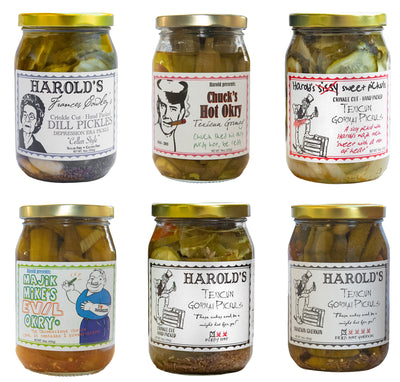
For inspiration, use Harold’s Pickles as your flavor benchmark. Their Original Beer Pickle is a solid example of a perfectly balanced beer pickle. Let it guide you as you finalize your spice blend and brine. Once your blend is ready, combine it with your brine and cucumbers to kick off your Southern pickling adventure.
FAQs
What’s the best beer style to use for beer pickles?
When it comes to beer pickles, the right beer can make all the difference. A lighter or medium-bodied beer, such as a lager or pilsner, is an excellent choice. These beers pair well with the bold, spicy flavors of the pickles, adding depth without stealing the spotlight.
The key is to select a beer that complements the spices and enhances the overall flavor profile, creating a harmonious balance in every bite.
How do I keep beer pickles crisp instead of soft?
To keep your beer pickles crunchy, start with small, whole cucumbers and make sure to remove the blossom end before pickling. Adding a tannin-rich ingredient, like grape or oak leaves, can also help preserve their crispness. Ferment them at the lowest temperature you can manage, as warmer conditions may cause the pickles to soften. These simple steps can go a long way in keeping your beer pickles firm and tasty.
Can I safely can beer pickles for shelf storage?
Beer pickles shouldn't be canned for shelf storage unless the recipe explicitly outlines the steps for sealing and processing them using a boiling water bath or a pressure canner. This process is crucial to ensure the pickles are safe to consume and can be preserved for an extended period.
Leave a comment