

pH Levels in Pickling: Why They Matter
Pickling isn’t just about flavor - it's about safety. The key to both is pH levels. A pH below 4.6 ensures food safety by preventing harmful bacteria like Clostridium botulinum from producing toxins. Here's what you need to know:
- Safety Threshold: Foods with a pH of 4.6 or lower are safe for storage. Vegetables naturally have a higher pH, so acid (like vinegar) is essential.
- Why pH Matters: pH controls microbial growth, impacts flavor, and preserves texture. It’s the backbone of safe, crunchy, and flavorful pickles.
- Testing pH: Use precise tools like digital pH meters to measure brine and vegetable acidity. Always test after equilibrium is reached.
- Common Mistakes: Diluting vinegar, using untested recipes, or reusing brine can compromise safety. Stick to proper ratios and reliable methods.
- Flavor and Texture: Lower pH enhances sourness and helps maintain crunch. Proper technique prevents mushy or discolored pickles.
Whether you’re fermenting or using vinegar, maintaining the right pH is non-negotiable for safe, delicious pickles.
Safety Risks of Incorrect pH Levels
Botulism Risk in Low-Acid Pickling
Pickling in low-acid environments can pose a serious risk if the pH level exceeds 4.6. This is because such conditions allow Clostridium botulinum to germinate and produce its dangerous toxin. These spores are incredibly heat-resistant, meaning they can't be destroyed at 212°F (the boiling point of water). The only way to neutralize them is by using a pressure canner that reaches temperatures of 240°F–250°F in low-acid environments - or by ensuring the pH stays at or below 4.6.
"Controlling the pH of the food is the main way to keep C. botulinum in its sporulated form, so it is not able to produce its toxin." - Kaitlyn Casulli, Extension Food Scientist, University of Georgia
Equilibrium pH and Why Testing Timing Matters
Maintaining safe pH levels isn't just about the numbers - timing matters too. Equilibrium pH refers to the point when the acidity of the brine and the solid food has balanced out, ensuring consistent safety throughout.
"Equilibrium pH means the final pH measured in the acidified food after all the components of the food have achieved the same acidity." - Cornell Food Venture Center
Testing the pH too early can give a false sense of security. For example, the brine may show a safe pH level, but dense vegetables may still be unsafe internally. Over time, the vegetables absorb the vinegar, which lowers their internal pH but can also reduce the acidity of the surrounding liquid. Safety is only guaranteed when both the brine and the produce have reached the same acidity level. For fermented pickles, it's critical that the pH drops below 4.6 within 48 to 72 hours to prevent harmful bacteria from thriving.
Common pH Problems in Pickling
Several common mistakes can compromise pH safety when pickling. One of the biggest issues is using untested or improvised recipes. If the ratio of vinegar to water isn't carefully measured, the pH might not reach the safe threshold. Even small adjustments, like diluting vinegar or adding extra water, can weaken the acid concentration, making it easier for bacteria to grow.
The size and density of vegetables also play a role. Cutting produce into uniform pieces ensures the acid penetrates evenly. Large or dense vegetables may not acidify properly, creating unsafe pockets. Additionally, using damaged produce - such as items with cracks, bruises, or soft spots - can create pathways for bacteria that acid may not fully neutralize.
Another critical mistake is reusing pickling brine. Once vegetables have soaked in the brine, they absorb much of the acid, leaving the remaining liquid far less acidic. This makes it unsafe to use for a new batch. Consistent attention to these details is essential to prevent botulism and ensure the safety of your pickled goods.
sbb-itb-820fb79
How pH Affects Flavor and Texture
How pH Shapes Flavor
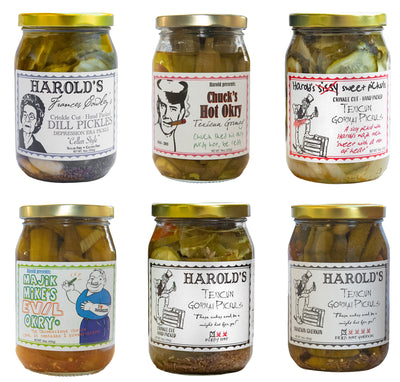
pH plays a key role in determining the sourness of pickles. At a pH of 4.0, pickles achieve a mild, bright acidity that highlights the natural flavors of the vegetables. Lowering the pH further to a range of 3.2–3.5 intensifies the sourness, creating a more complex flavor profile. This depth is what sets lacto-fermented pickles apart from those made with simple vinegar brines. During the early stages of fermentation (pH 4.5–5.0), lactic acid bacteria produce acids and carbon dioxide, adding layers of flavor beyond the straightforward tang of vinegar. As Christina Ward, Master Food Preserver, aptly states: "The answer is acid". In artisanal recipes, sugar is used sparingly to balance the acidity without affecting the pH. For instance, Harold's Texicun Gormay Pickuls embraces bold, spicy flavors that complement its sharp acidity. This careful balance of pH not only enhances taste but also supports the brine's role in preservation.
How pH Affects Vegetable Texture
Texture is another area where pH proves essential. A proper pH level ensures pickled vegetables remain crunchy while staying safe to eat. Adding too much vinegar without diluting it can lead to overly soft produce instead of preserving its firmness. On the flip side, if the pH doesn't drop low enough during fermentation, unwanted yeasts and molds can take over, resulting in gray, mushy vegetables. Salt is a critical component here, as it draws water out of the vegetables' cell walls through osmosis, firming up their texture even before the acid takes effect. A helpful tip for cucumber pickles is to trim 1/8 inch from the blossom end before pickling. This removes enzymes that can speed up softening.
pH and Color Changes in Vegetables
pH also has a significant impact on the appearance of pickled vegetables. For example, red cabbage turns a vibrant red in an acidic brine, shifts to purple as the pH nears neutral, and takes on a blue-green hue in alkaline conditions. Similarly, acidic environments help maintain the bright pigments in beets and peppers. Garlic, on the other hand, may turn blue or green in acidic brines when trace amounts of copper react with its sulfur compounds. While this color change may seem concerning, it is completely safe to eat. To avoid unexpected discoloration, use non-reactive tools like stainless steel or glass, pure pickling salt free of iodine or anti-caking agents, and soft or distilled water. Hard water minerals can cloud the brine and dull the colors of your pickled vegetables.
Botulism Risk in Pickled Foods: The pH 4.6 Critical Limit
How to Measure pH in Pickling
pH Test Strips vs. Digital pH Meters for Pickling: Which Should You Use?
pH Strips vs. Digital pH Meters
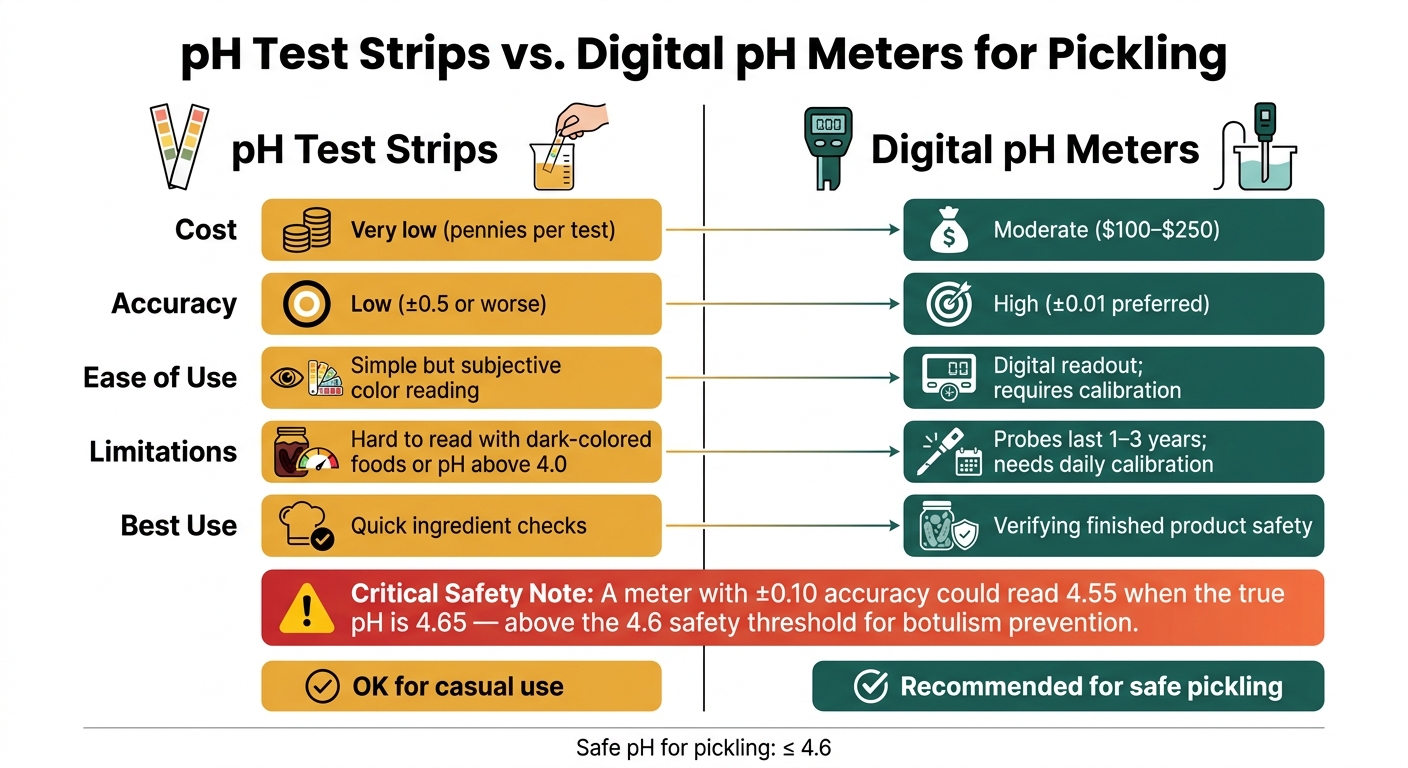
When it comes to measuring pH in pickling, you have two main options: pH test strips and digital pH meters. Test strips are budget-friendly and straightforward - just dip one in your brine and compare the color to a chart. But here's the catch: subtle color variations can make them tricky to interpret, especially with dark-colored foods or solutions with a pH above 4.0.
For those who pickle often, a digital pH meter is a better choice due to its precision. Christina Ward, a Master Food Preserver, emphasizes the importance of using a reliable tool:
"Measuring pH can be done by the home cook with one simple tool. No, not those little strips of litmus paper - their color changes can be difficult to read correctly. A simple digital pH meter does the job nicely."
The accuracy difference is no small matter. For example, a meter with ±0.10 accuracy might show a pH of 4.55, but the actual value could range from 4.45 to 4.65 - possibly crossing the critical 4.6 safety threshold. On the other hand, a meter with ±0.01 accuracy narrows that range to 4.54–4.56. For artisanal picklers, investing in a reliable food-grade digital pH meter (priced between $100 and $250) ensures safety and consistency.
| Feature | pH Test Strips | Digital pH Meters |
|---|---|---|
| Cost | Very low (pennies per test) | Moderate ($100–$250) |
| Accuracy | Low (typically ±0.5 or worse) | High (±0.01 preferred) |
| Ease of Use | Simple but subjective | Digital readout; requires calibration |
| Limitations | Hard to read with dark foods | Probes last 1–3 years |
| Best Use | Ingredient checks | Verifying finished product safety |
Once you've chosen your tool, using it correctly is key to getting reliable readings. Proper technique ensures your pickling process stays both safe and consistent.
Best Practices for pH Testing
The way you prepare your sample can make or break your pH reading. For liquid brines, simply submerge the probe. For solid or chunky foods, blend them into a slurry. If the mixture is too thick, you can add 20 ml of distilled water per 100 g without affecting the accuracy.
To test the internal pH of vegetables, which is critical for safety, follow these steps:
- Drain the solids for about two minutes.
- Rinse them with distilled water to remove surface brine.
- Blend them before testing.
This ensures you're measuring the pH inside the food, not just on the surface. For consistency, test at least three samples from each batch and calculate the average. Also, perform tests at room temperature (65°F to 75°F) since temperature can affect pH readings. A pH meter with Automatic Temperature Compensation (ATC) can help adjust for these fluctuations.
Caring for Your pH Meter
Keeping your digital pH meter in top shape is essential for accurate readings over time. Calibration is a must - do it at least once a day or once per shift if you're working on multiple batches. Use a 2-point calibration with pH 4.0 and pH 7.0 buffer solutions to cover the range needed for safe pickling. William McGlynn, a specialist in horticultural products, stresses this point:
"The pH meter MUST be calibrated at least daily, or once per shift, if multiple production shifts are scheduled."
After each use, rinse the probe with distilled water and blot it dry with a lint-free tissue. When you're done for the day, store the probe in a proper storage solution, like potassium chloride (KCl) or pH 4.0/7.0 buffer. Avoid storing it in plain or distilled water, as this can damage the electrode over time. Even with proper care, probes usually need replacing every one to three years.
How to Control pH in Pickling
Building a Reliable Pickling Brine
Safe pickling starts with choosing the right ingredients. First and foremost, always use vinegar labeled at 5% acidity - this is non-negotiable. Christina Ward, a Master Food Preserver, emphasizes:
"In any pickling recipe worth its salt... it will specifically tell you to use vinegar that has a 5% acidity."
Flavored or specialty vinegars often have lower acidity levels, around 4%, which may not be sufficient to keep your brine below the critical 4.6 pH safety threshold. For a quick-process brine that works reliably, use a ratio of 3 quarts of 5% vinegar to 1 gallon of water.
When it comes to salt, stick to pure pickling or canning salt. Table salt contains additives that can cloud your brine and alter the color of your pickles. Also, opt for distilled or softened water instead of hard water, as minerals in hard water can interfere with acid levels and make the brine cloudy.
Using Acidifying Agents Correctly
If a batch's pH hovers near the 4.6 safety limit, you can adjust it by adding bottled lemon juice or citric acid. Bottled lemon juice is preferable because its pH is standardized, typically between 2.0 and 2.6, ensuring consistency. Citric acid is another option, particularly for recipes where you want to lower the pH without altering the flavor too much - this is common for tomato-based pickled items.
One common mistake to avoid: never dilute vinegar to reduce its sharpness. If the brine tastes too sour, add sugar instead. Diluting vinegar raises the pH, which can make the product unsafe. Megan Taylor from Ohio State University Extension explains:
"If the product is too sour for personal taste, increase the amount of sugar rather than diluting the vinegar, as diluting the vinegar will decrease the acid concentration and thus the preservative effect."
Additionally, always prepare your brine in non-reactive containers like stainless steel, glass, or enamelware. Avoid reactive metals such as copper, brass, or iron, as they can compromise both the safety and flavor of your pickles.
Keeping Batches Consistent
Consistency in pickling comes down to three key practices: accurate measurements, proper submersion, and detailed record-keeping.
For fermented pickles, measure salt by weight instead of volume. A reliable ratio is 20 grams (about 0.7 ounces) of salt per 1 kilogram (about 2.2 pounds) of total contents. Volume measurements can vary too much due to differences in grain size, which can throw off the brine's salinity and affect the final pH.
Submersion is critical during lacto-fermentation. As Terumi Morita explains:
"The single rule that cannot be broken is submersion. Lactic acid bacteria are anaerobic; they thrive without oxygen."
Use fermentation weights or a water-filled zipper-lock bag to keep all solids submerged. Any exposure to oxygen can lead to the growth of mold and yeast, which may raise the pH and ruin your batch.
Finally, keep thorough documentation of every detail: starting ingredient weights, salt percentages, vinegar brand and acidity, and all pH readings. Since the natural pH of vegetables varies with ripeness and type, testing each batch is essential. Kaitlyn Casulli from the University of Georgia Extension stresses:
"The pH of a food will not be consistent between batches... the pH should be measured every time to ensure the final pH of the food is below 4.6."
Good record-keeping ensures you know exactly when your fermented pickles have stabilized at a safe pH - this is the perfect moment to transfer them to refrigeration.
Conclusion: pH as the Foundation of Good Pickling
The pH level is the backbone of safe, flavorful, and consistent pickling. Every choice you make - like opting for vinegar with 5% acidity or checking the equilibrium pH - depends on keeping the pH at or below 4.6.
As the Cornell Food Venture Center explains:
"The pH value of 4.6 is important because it is the limiting factor for the growth of an extremely dangerous microorganism called Clostridium botulinum, which produces a potent toxin that causes the lethal disease botulism."
This isn't just about safety. pH also plays a key role in enhancing the sensory experience of pickles. It determines the sharpness of the sour flavor, helps vegetables stay crisp, and even impacts how well the colors hold up in the jar.
For small-batch producers like Harold's Pickles, managing pH is essential for delivering consistent, bold flavors - whether it’s Chuck’s Hot Okry or The Original Beer Pickle. Since natural pH levels in produce can vary, testing each batch is a must.
Christina Ward puts it perfectly: "Changing the acidity of a food to within a range that is hostile to microbes yet palatable to humans extends the useful lifespan of that food."
Striking the right balance between safety and flavor is what makes pickling an art worth mastering.
FAQs
How long does it take for pickles to reach equilibrium pH?
Equilibrium pH occurs when the acidity of the brine and the pickled food balances out. To measure this accurately, wait 12–24 hours after processing, allowing the jars to cool to room temperature. Testing too early can lead to unreliable readings since the acid requires time to fully permeate the food. Smaller pieces of food tend to reach this balance more quickly than larger ones.
What’s the easiest way to test the pH inside the vegetables?
To check the pH level inside vegetables, start by creating a consistent slurry. Allow the processed product to sit for at least 24 hours to stabilize. Once ready, drain any liquid, rinse the vegetables thoroughly with distilled water, and blend them until smooth. If necessary, add a bit of distilled water to achieve the right consistency. For precise results, use a calibrated digital pH meter - it’s far more dependable than litmus paper.
Can I safely adjust a batch if the pH is too high?
Yes, it’s possible to adjust a batch safely if the pH is too high. Keep an eye on each batch and add more acid as necessary to ensure the final pH remains at or below 4.6. After mixing thoroughly, check the pH again once the ingredients have stabilized - typically about 24 hours after processing. Use a calibrated pH meter to confirm the levels meet safety standards for your pickles.
Leave a comment