

Middle Eastern Pickled Lemons: A Flavor Guide
Middle Eastern pickled lemons, also known as preserved lemons, are a staple in cuisines like Moroccan and North African cooking. They are made by curing lemons in salt and their own juices, transforming the fruit into something savory, tangy, and deeply flavorful. The rind becomes tender and edible, while the brine adds a salty punch to dishes. Here's a quick breakdown:
- What They Are: Lemons cured in salt and lemon juice, often with added spices.
- How They're Used: Key ingredient in tagines, stews, salads, and sauces. The rind is the most prized part.
- Flavor Profiles: Moroccan versions are pure and citrusy; Egyptian ones are bold and sharp; spiced versions include flavors like chili, turmeric, and cinnamon.
- Preparation: Lemons are packed with salt, left to ferment for weeks, and can last up to a year in the fridge.
- Cooking Tips: Use the rind in small amounts to flavor seafood, poultry, grains, or dressings. The brine can season sauces or even drinks.
Preserved lemons bring a rich, tangy depth to dishes, making them a must-have for adding complexity to your cooking.
How to Make and Use Preserved Lemons
sbb-itb-820fb79
How Pickled Lemons Are Made
How to Make Traditional Middle Eastern Pickled Lemons: Step-by-Step Process
Basic Preparation Steps
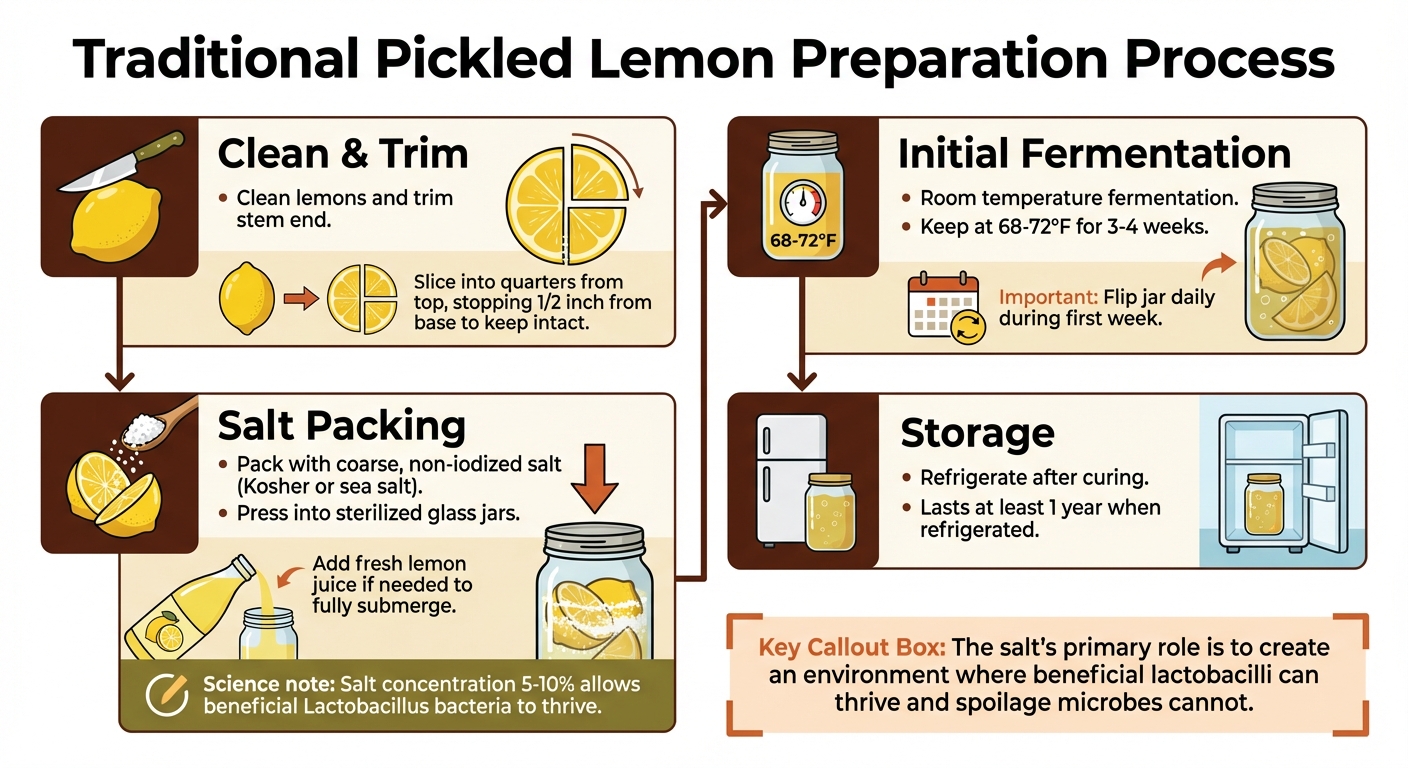
Making pickled lemons the traditional Moroccan way starts with cleaning and trimming the lemons at the stem end. Each lemon is sliced into quarters from the top, stopping about 1/2 inch from the base to keep it intact.
Next comes the salt packing. Coarse, non-iodized salt (like kosher or sea salt) is generously packed into the sliced lemons. These are then pressed into sterilized glass jars, which helps release their natural juices. If needed, fresh lemon juice is added to ensure the lemons are fully submerged.
The jar is sealed and left at room temperature (68-72°F) for 3 to 4 weeks. During the first week, the jar is flipped daily to redistribute the salt and brine evenly. This process, called lacto-fermentation, allows Lactobacillus bacteria to convert the lemons' natural sugars into lactic acid. This not only preserves the lemons but also gives them their distinct tangy flavor. A salt concentration of 5-10% is key - it encourages beneficial bacteria while keeping spoilage microbes at bay.
"People are often too timid with the salt. You are not just seasoning; you are preserving. The salt's primary role is to create an environment where beneficial lactobacilli can thrive and spoilage microbes cannot." - Expert Pro Tip, The Rike
Once the lemons are fully cured, they can be refrigerated and will stay good for at least a year. Fermentation also helps reduce bitterness by breaking down limonin, a compound found in the pith.
These steps are the foundation for pickled lemons, with regional tweaks adding unique flavors.
Regional Differences
The Moroccan method keeps it simple with just salt and lemon juice, producing a pure, savory, and slightly floral flavor. However, other Middle Eastern styles often add spices for extra depth. Ingredients like cinnamon sticks, cardamom pods, cloves, black peppercorns, and bay leaves are common. In the Levant region, fresh herbs like rosemary or thyme are sometimes included in the brine for added flavor.
Some variations also involve covering the cured lemons with extra-virgin olive oil to block oxygen, which can extend their shelf life. Modern shortcuts, like using a 50/50 salt-sugar mix, can cure sliced lemons in just three days. However, this quicker method skips the rich, complex flavors that develop during the traditional weeks-long fermentation process.
Flavor Profiles by Region
Across the Middle East, regional pickling techniques create distinctive flavors that highlight local ingredients and culinary traditions.
Moroccan Preserved Lemons
Moroccan preserved lemons are made with just salt, lemon juice, and a touch of sugar. This minimalist method transforms the lemons into something entirely different from their fresh counterparts. The peel becomes soft and concentrated, delivering balanced citrus flavors. Over weeks of fermentation, the lemons develop what chefs often call "lemon umami", a depth of flavor that fresh lemons simply can't match.
"They add a big punch of flavor: heavy citrus, heavy floral notes from the oils in the peel, and ultimately heavy umami. It's that extra something in the background of a dish that piques your curiosity." – Michael Solomonov, Chef
This unique flavor profile makes them a key ingredient in Moroccan tagines, where their complexity enhances the dish without overpowering it. The peel is the real treasure here - both the zest and pith soften into a buttery texture and become packed with flavor after curing. By contrast, Egyptian preserved lemons offer a more direct and bold citrus punch.
Egyptian Preserved Lemons
Egyptian preserved lemons have been around since at least the 12th century, with their preparation documented in Ibn Jumay's writings on lemon uses. This method involves slitting the lemons, packing them with salt, and allowing them to ferment in their own juices for several weeks. The result? A sharp, intensely lemony flavor that's less complex than the Moroccan version but equally impactful.
These lemons are often used as condiments or chopped into salads, where their boldness shines without the need for cooking.
Spiced Middle Eastern Versions
While Morocco and Egypt focus on the citrus itself, other regions take a spiced approach, adding bold flavors to the pickling process. Tunisian-Israeli styles, for instance, use a mix of 70% salt and 30% sugar, along with chili, paprika, and turmeric. This combination creates a smoky, spicy profile with a vibrant yellow color.
Indian recipes go even further with twice the salt concentration of North African methods - about 20% compared to 5–10% - and add turmeric, fenugreek seeds, and chili powder for a fiery, earthy flavor. Meanwhile, British-influenced recipes from the 19th century incorporate warm spices like cloves, mustard seed, and mace, blending traditional and colonial influences to create complex, aromatic flavors.
These spiced versions are perfect when you want the pickled lemons to take center stage, adding layers of heat, smokiness, and spice to stews, rice dishes, or grilled meats.
Ingredients and Their Flavor Impact
The traditional methods of preparing pickled lemons are only part of the story. The real magic lies in the ingredients and how they come together to create the distinct flavor profiles of different regions.
Main Ingredients
At the heart of Middle Eastern pickled lemons are a few essential components that define their taste. Lemons, of course, are the foundation, but the type of lemon you choose can change everything.
- Beldi lemons (from Morocco) are small, fragrant, and hand-harvested. They’re prized for their tender rinds and briny, citrus-forward flavor.
- Meyer lemons bring a sweeter, floral touch with thinner skin and less bitterness.
- Eureka lemons, the thick-skinned variety commonly found in stores, deliver a bold and intense flavor.
Salt plays a key role, drawing out the lemon’s juices to form a brine. This brine not only softens the rinds but also tempers the bitterness. The amount of salt used varies by region, influencing the intensity of the final flavor. Lemon juice is another essential component, brightening the overall taste and ensuring the lemons stay submerged in the brine.
The addition of spices is where the real artistry comes in. These spices elevate preserved lemons from simple pantry staples to complex, regional delicacies.
Spice Flavor Comparison
Spices are what give pickled lemons their unique character, allowing them to complement a variety of dishes and cuisines. Here’s a breakdown of how some common spices contribute to flavor and where they’re typically used:
| Spice | Flavor Notes | Regional Use |
|---|---|---|
| Nigella Seeds | Nutty, slightly bitter, with an onion-like hint | Egypt and the Middle East |
| Safflower | Floral, with a yellow hue | Egypt |
| Chilies / Paprika | Adds heat, smokiness, and a red tint | Tunisia, Israel, and North Africa |
| Turmeric | Earthy and slightly bitter, with a deep yellow color | India, Israel, and the Middle East |
| Coriander / Cumin | Warm, citrusy, and earthy | Morocco and the Middle East |
| Fenugreek Seeds | Bitter, with a maple-like aroma | India |
| Cloves / Cinnamon | Sweet, warm, and aromatic | Moroccan stews and British-influenced variations |
For the best results, use kosher salt to create a clear, clean brine. If the finished lemons seem too salty for your dish, you can easily adjust by rinsing them under cold water or blanching them briefly before use.
These ingredients and their thoughtful combinations ensure that pickled lemons are as versatile as they are flavorful.
How to Use Pickled Lemons in Cooking
Common Cooking Uses
The rind is the star of pickled lemons. Unlike fresh lemons, the fermentation process transforms the pith and zest into something tender and packed with flavor. You can slice, chop, or mince it to suit your dish. The pulp works well in stews and sauces, while the brine provides a salty punch to drinks and pan sauces.
Before using, rinse pickled lemons under cold water to remove excess salt. For a milder flavor, blanch them briefly in boiling water. When making tagines or braises, chopped rind pairs beautifully with spices like coriander, cinnamon, and cumin. In salads or grain dishes, slivers of pickled lemon can brighten couscous, bulgur, or rice, especially when combined with ingredients like chickpeas, toasted walnuts, and fresh herbs.
"One-and-done way to season and brighten just about anything bland." - Christine Sahadi Whelan, Co-owner, Sahadi's
Don’t discard the brine! A few drops can deglaze pans, season roasted vegetables, or add a unique twist to drinks like seltzers or Bloody Marys. For dips, fold minced pickled lemons into guacamole, pesto, or ranch dressing to create a bold flavor boost.
These versatile uses naturally lead to some perfect food pairings.
Food Pairing Ideas
The bold citrus flavor of pickled lemons works wonders in balanced dishes. They pair beautifully with seafood, poultry, grains, and legumes. Their tangy notes cut through the richness of fatty fish like salmon and balance the flavors of ingredients such as green olives. If you're new to pickled lemons, start small - use no more than half a preserved lemon per dish.
| Dish Type | Suggested Lemon Amount | Complementary Ingredients |
|---|---|---|
| Seafood (Salmon, Bass, Shrimp) | Minced rind or compound butter | Pistachios, olive oil, chili flakes, butter |
| Poultry (Tagines, Roast Chicken) | 1/2 lemon, chopped or whole | Olives, harissa, fennel, saffron, cinnamon |
| Grains (Couscous, Bulgur, Rice) | Chopped slivers | Chickpeas, toasted walnuts, raisins, fresh herbs |
| Legumes (Lentil Soup, Beans) | 1–2 tablespoons minced | Garlic, cumin, cilantro, kidney beans |
| Salads & Dressings | 1 teaspoon paste or minced rind | Tahini, yogurt, radicchio, hazelnuts, honey |
For something creative, try mincing the rind into a paste and blending it into vinaigrettes, or mix it with horseradish for a distinctive cocktail sauce. Its salty, tangy depth can even balance out desserts like tea cakes.
Conclusion
Preserved lemons, with their roots in centuries-old traditions and regional culinary practices, continue to bring bold and unexpected flavors to modern kitchens.
Middle Eastern pickled lemons provide a flavor depth that fresh citrus just can't replicate. Through fermentation, the entire fruit - rind, pith, and pulp - becomes soft, savory, and completely edible. Instead of the sharp tang of fresh lemons, preserved lemons offer a salty, mellow, and layered flavor that enhances everything from tagines to grain-based salads.
The softened, intensely flavored rind works wonders in dishes like lentil soups, compound butters, and pan sauces, making preserved lemons a must-have ingredient. Whether you're adding thin slices to a grain bowl or using the brine to add brightness to a cocktail, these lemons are a go-to flavor booster.
But their appeal goes beyond taste. These lemons represent a rich culinary history and have even been valued in Ayurvedic practices for their potential digestive benefits.
For those who appreciate spicy, tangy, and flavorful pickled goods, Harold's Pickles offers a variety of options made with high-quality, simple ingredients - perfect for anyone looking to elevate their meals with bold flavors.
With preserved lemons on hand, even simple dishes can become extraordinary. Keep a jar in your fridge, and you'll always have a ready-to-use seasoning to bring brightness and depth to your cooking.
FAQs
How do I know my preserved lemons are safe to eat?
Preserved lemons are safe to eat as long as they’ve been properly fermented at room temperature for several weeks or months. To ensure they’re still good, check for signs of mold, off-odors, or spoilage. For added safety, you can wash or blanch the lemons before using them.
Can I use limes or other citrus instead of lemons?
Yes, you can swap in limes or Meyer lemons for regular lemons when pickling. That said, traditional Middle Eastern preserved lemons are usually made with standard lemons, which gives them their characteristic flavor. Using a different citrus will change the taste, so it’s worth experimenting to see what works best for your palate.
What’s the easiest way to reduce the saltiness before cooking?
To tone down the saltiness of preserved lemons before using them in your cooking, start by rinsing them under cold water to remove the excess salt on the surface. If you want to reduce the saltiness even further, try blanching them quickly in boiling water. These easy techniques can soften the salty edge while keeping their distinct flavor intact.
Leave a comment