

Fermentation vs. Vinegar: Global Pickling Methods
Fermentation and vinegar pickling are two distinct ways to preserve vegetables, each offering unique flavors, benefits, and techniques. Fermentation uses salt and natural bacteria to create a tangy, complex taste while providing probiotics. Vinegar pickling, on the other hand, relies on acetic acid for a sharp, clean tang and faster preparation but lacks live cultures. Both methods are used worldwide, from Korean kimchi to Indian mango pickles and American dill pickles.
Key Differences:
- Flavor: Fermentation delivers deep, layered sourness; vinegar pickling offers a sharper tang.
- Nutrition: Fermented pickles contain probiotics; vinegar pickles retain nutrients but lack live cultures.
- Time: Fermentation takes weeks; vinegar pickling can be done in hours or days.
- Storage: Fermented pickles need refrigeration; vinegar pickles can be shelf-stable if canned.
These methods reflect diverse global practices, with examples like Korean kimchi, German sauerkraut, and Tex-Mex-inspired products like Harold's Pickles. Whether you're after gut health or quick preservation, both techniques offer flavorful solutions.
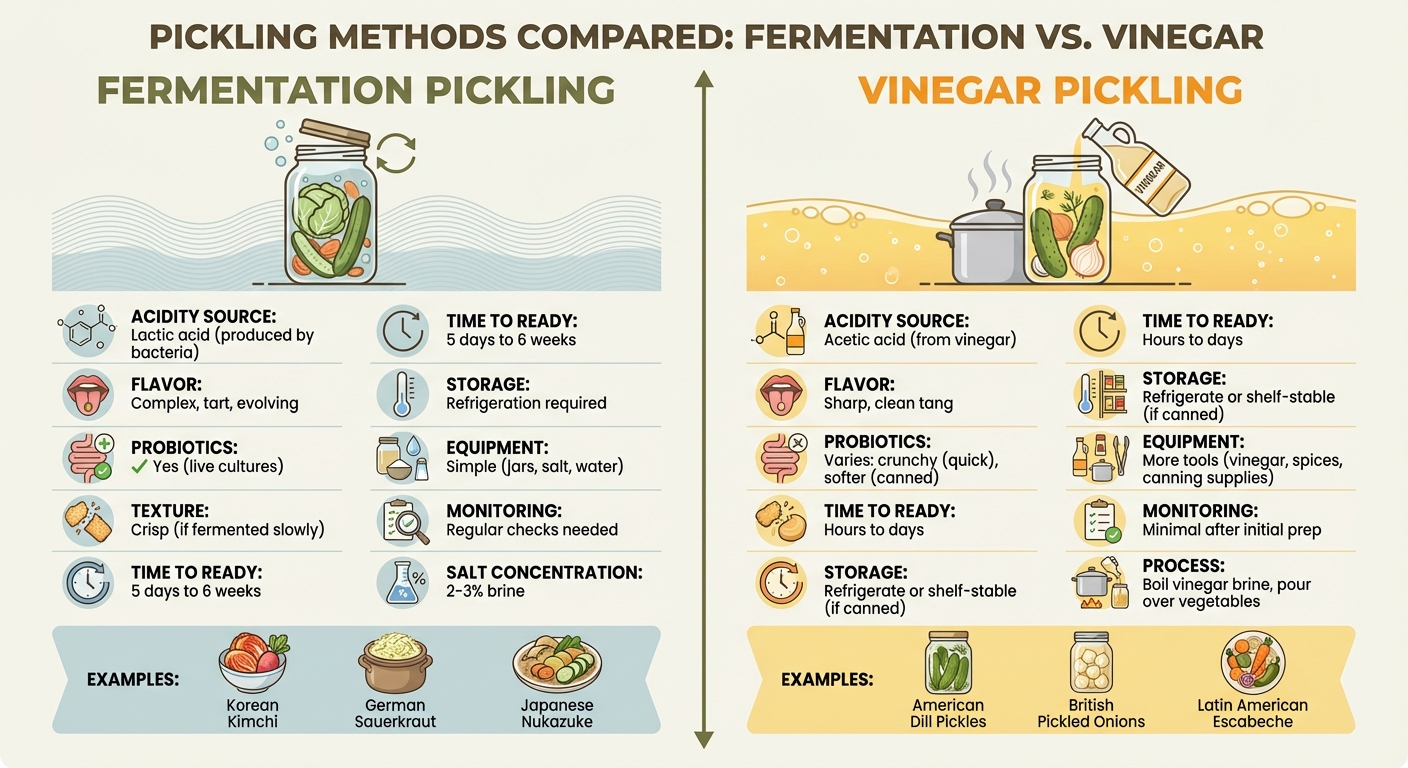
Fermentation vs Vinegar Pickling: Key Differences Comparison Chart
How Pickling Methods Work
Fermentation-Based Pickling
Fermentation-based pickling uses lacto-fermentation, a natural process where Lactobacillus bacteria break down sugars into lactic acid. To get started, submerge your vegetables in a 2–3% salt brine. Over time, you'll notice bubbles, a cloudy brine, and sometimes a harmless white film - these are all signs that fermentation is working its magic. This method creates a more layered, mellow sourness compared to the sharp bite of vinegar pickling.
It's crucial to keep the vegetables fully submerged and maintain the right salt concentration. If you spot any fuzzy mold, remove it immediately. The unpasteurized version of fermented pickles is often sold refrigerated because it contains live lactic acid bacteria and active enzymes. However, when heat is applied for shelf-stable products, these live cultures are destroyed, meaning the probiotic benefits are lost. Unlike vinegar pickling, fermentation takes its time, delivering its unique flavor over days or weeks.
Vinegar-Based Pickling
Vinegar pickling, on the other hand, is all about speed. Instead of relying on natural fermentation, it uses vinegar (acetic acid) to instantly lower the pH and preserve the vegetables . This method creates a bold, tangy flavor that can vary depending on the type of vinegar - whether you go for distilled white, apple cider, or rice vinegar.
The process is straightforward: combine vinegar with water, salt, sugar, and spices, bring the mixture to a boil, and pour it over your vegetables. For quick refrigerator pickles, that's all you need. For longer storage, pack the vegetables into sterilized jars and process them in a boiling water bath. This heat treatment not only kills harmful microorganisms but also seals the jars, allowing for extended pantry storage.
Unlike fermented pickles, vinegar pickles don’t contain live probiotics. However, they’re quick and consistent, taking just hours or days instead of weeks, and require minimal equipment. Whether you’re short on time or prefer a sharper flavor, vinegar pickling offers a simple and efficient way to preserve your favorite vegetables.
Pickling Methods Around the World
Fermentation Methods by Region
When it comes to fermented pickles, Korean kimchi stands out as one of the most famous examples. The process begins with napa cabbage or radish, which is soaked in a salt brine. It’s then mixed with chili flakes, garlic, ginger, and seafood-based seasonings. The mixture ferments at a cool room temperature before being transferred to cold storage, where its flavors deepen over time. In Japan, nukazuke offers a unique approach, with vegetables like cucumbers, carrots, and eggplant buried in a fermented rice-bran bed called nuka. This bed is seasoned with salt and sometimes kombu or dried chili, becoming a "living culture" that’s maintained and reused for repeated pickling.
Eastern European sauerkraut keeps things simple. It relies on cabbage, salt (usually 2–3% by weight), and sometimes caraway or juniper berries. This mixture ferments in crocks or barrels for weeks at cool temperatures. Meanwhile, Indian fermented pickles - such as mango, lemon, or amla varieties - combine salt and spices to create bold, long-lasting flavors. In the Middle East, fermented turnip pickles, known as torshi, gain their signature pink hue from beets added to the brine, resulting in a tangy and slightly earthy flavor. These fermentation methods stand in contrast to vinegar-based pickling techniques, which vary just as widely across the globe.
Vinegar Pickling Methods by Region
In the United States, dill pickles and bread-and-butter pickles dominate the shelves. Dill pickles feature cucumbers packed in a hot vinegar brine with dill, garlic, and pickling spices. Bread-and-butter pickles, on the other hand, add sugar and spices like mustard seed and turmeric for a sweeter, tangy flavor. Across the Atlantic, British and Western European pickled onions and gherkins are steeped in malt or spirit vinegar with sugar and mustard seeds, creating a sweet-sour profile that pairs perfectly with cheese or cold meats.
In Latin America, escabeche offers another twist. Par-cooked vegetables such as carrots, onions, jalapeños, and cauliflower are marinated in hot vinegar with garlic, oregano, and bay leaves. The result is a tangy condiment often served with meats or tacos. In India, vinegar pickling exists alongside fermentation. For example, vinegar-based garlic or chili pickles are made by simmering the main ingredient in spiced vinegar, sometimes with oil, delivering a sharper, more immediate tang compared to their fermented counterparts.
Combined Methods and Modern Approaches
In India, traditional pickling methods often blend fermentation and vinegar techniques, with choices influenced by climate, shelf life, and flavor preferences. Meanwhile, modern cooks around the world have embraced refrigerator pickles, a quick vinegar-based method that skips the need for canning. Sliced vegetables are covered with hot or cold vinegar brine, cooled, and stored in the refrigerator, ready to enjoy within days or weeks.
In North America and Europe, there’s been a renewed interest in traditional fermentation. This has led to clearer product labeling, distinguishing between raw, refrigerated fermented pickles - prized for their probiotic benefits - and shelf-stable vinegar pickles, valued for their convenience and long shelf life. As a result, consumers are becoming more informed about the differences between these preservation methods, appreciating the variety of flavors, nutritional benefits, and practical uses each style offers.
Flavor, Nutrition, and Practical Differences
Flavor and Texture Differences
When it comes to flavor, texture, nutrition, and practicality, fermented and vinegar pickles each bring something different to the table. Fermented pickles boast a layered, evolving tartness thanks to lactic acid produced by natural bacteria. This creates a more nuanced flavor profile. On the other hand, vinegar pickles hit you with a sharp, clean tang right away, thanks to the acetic acid in vinegar. It’s a simpler, more immediate sourness.
Texture-wise, fermented pickles stay crisp and firm when fermented slowly at temperatures around 65–70°F. Vinegar pickles vary more: quick refrigerator pickles tend to be crunchy, while canned varieties often become softer.
Nutrition and Storage
Fermented pickles are a powerhouse for gut health, offering live probiotics that support digestion. They also retain natural enzymes and can enhance the bioavailability of vitamins B and C. Vinegar pickles, while lacking live cultures, still preserve nutrients.
Storage needs differ significantly. Fermented pickles are best kept refrigerated to slow down the fermentation process and maintain their quality. In contrast, properly canned vinegar pickles can be stored at room temperature for months, while refrigerator vinegar pickles last a few weeks when kept cold.
Time, Equipment, and Ease of Use
Fermentation and vinegar pickling also differ in terms of time, tools, and effort. Fermentation is a slower process, taking anywhere from 5 days to 6 weeks depending on temperature and the desired flavor. It requires very basic equipment: jars, salt, water, and vegetables. A typical brine uses a 2–3% salt concentration to encourage the right bacteria to thrive. However, the process does demand regular monitoring to prevent over-fermentation.
Vinegar pickling, on the other hand, is much quicker, with pickles ready in just hours or days. It does require more upfront equipment, like vinegar, spices, pots for heating the brine, and canning supplies if you’re planning for long-term storage. Its predictable and straightforward nature makes it especially appealing for beginners.
Side-by-Side Comparison
| Aspect | Fermentation Pickling | Vinegar Pickling |
|---|---|---|
| Acidity Source | Lactic acid (produced by bacteria) | Acetic acid (from vinegar) |
| Flavor | Complex, tart, evolving | Sharp, clean tang |
| Probiotics | Yes (live cultures) | No (killed by vinegar or heat) |
| Texture | Crisp (if fermented slowly) | Varies: crunchy (quick), softer (canned) |
| Time to Ready | 5 days to 6 weeks | Hours to days |
| Storage | Refrigeration required | Refrigerate or shelf-stable (if canned) |
| Equipment | Simple (jars, salt, water) | More tools (vinegar, spices, canning supplies) |
| Monitoring | Regular checks needed | Minimal after initial prep |
sbb-itb-820fb79
Pickling in the United States and Harold's Pickles
Regional American Pickling Styles
Pickling in the United States is a flavorful blend of immigrant traditions and Indigenous practices, showcasing the diversity of American culinary heritage. Eastern European Jewish immigrants brought garlic dill cucumber pickles and sauerkraut through lactic acid fermentation, giving rise to the iconic New York deli pickle. In the Midwest, German and Central European communities introduced barrel-fermented cabbage and root vegetables, while Southern pickling, influenced by African diaspora techniques, developed unique creations like pickled okra, watermelon rind, and green tomatoes. These Southern pickles often feature sugar-and-spice vinegar brines, creating a sweet-and-tangy profile.
In the South, vinegar brines are also used for okra, green beans, and chowchow, with hot peppers adding a kick. These pickles are typically canned for long-term storage. Meanwhile, the Midwest is known for classic dill spears and sandwich slices, often made as hot-packed vinegar pickles for shelf stability. Ethnic delis in the region also carry barrel-fermented cucumbers, preserving old-world methods. In the Southwest, Mexican and Central American influences shine through quick-pickling techniques that use chiles, citrus, and vinegar, especially for jalapeños and carrots.
Modern craft pickling has taken root in regions like the Pacific Northwest, Mountain West, and parts of the Midwest. These areas experiment with beer, cider, and other craft beverages in vinegar brines, blending malt vinegar with beer reductions or hops alongside traditional pickling spices. These quick-pickling methods echo European traditions while offering a fresh twist. Together, these approaches form a rich tapestry of pickling styles that continue to inspire modern makers, including Harold's Pickles.
Harold's Pickles Product Line
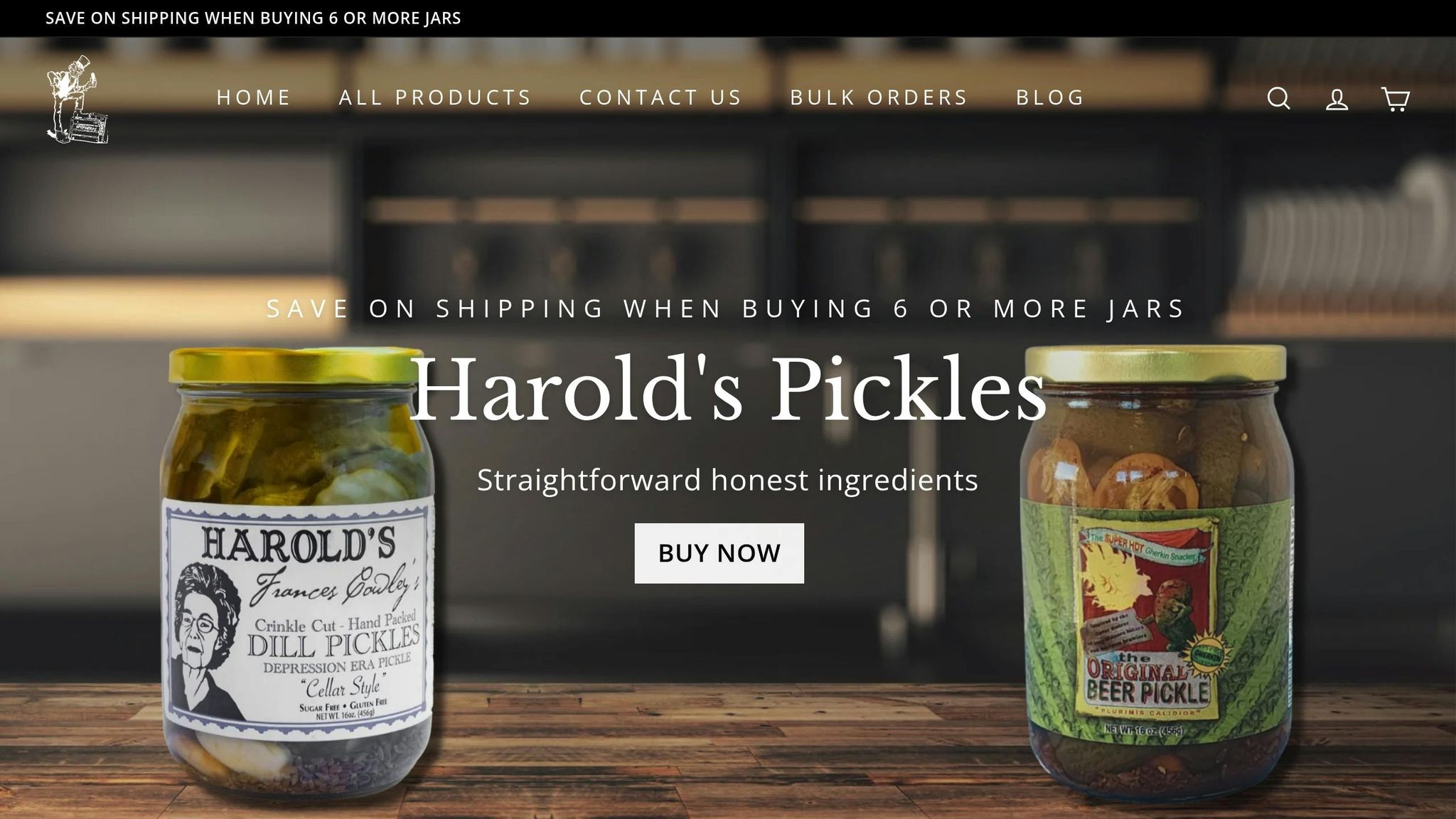
Harold's Pickles is a prime example of how regional American pickling styles come together in bold, inventive products. Based in Texas and produced by Conscious Choice Foods, Harold's Pickles takes inspiration from Southern, Tex-Mex, and craft beer traditions, all while using simple, high-quality ingredients.
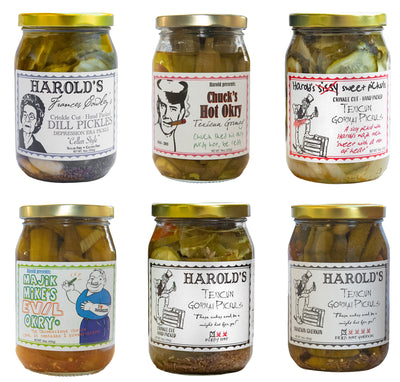
Their Texicun Gormay Pickuls channel Tex-Mex flavors, combining chiles, garlic, and a vinegar-forward brine reminiscent of jalapeño pickles from Texas border cuisine. Chuck's Hot Okry delivers a fiery Southern-style pickled okra, perfect as a bar snack or a zesty addition to a Bloody Mary. For those who love classic flavors, Francis Cowley's Dill Pickles offer a nod to traditional American dill pickles. And for a modern twist, The Original Beer Pickle incorporates a craft beer influence, blending garlic, heat, and a vinegar brine for a unique flavor.
Harold's Pickles showcases how vinegar-based pickling remains a cornerstone of American pickling traditions. By combining regional spices, chiles, and contemporary ideas, their products celebrate the rich and varied culinary heritage of the United States.
EP 2/12 Fermenting vs. Vinegar Pickling
Conclusion
Fermentation and vinegar pickling each bring something special to the table, catering to different tastes and needs. Fermented pickles are known for their complex, layered sourness and probiotic benefits, while vinegar pickles stand out with their sharp, clean tang, crisp texture, and quick preparation. The latter is especially ideal for bright, bold flavors that can be safely canned for long-term storage.
These techniques are deeply rooted in cuisines worldwide - think Korean kimchi, German sauerkraut, American dill pickles, and Indian spiced preserves. Fermentation shines when it comes to depth of flavor and probiotic potential, while vinegar pickling is prized for its speed, safety, and vibrant taste.
In the U.S., these global traditions have evolved into unique regional expressions. Take Harold's Pickles, for example. Their lineup - including Harold's Texicun Gormay Pickuls, Chuck's Hot Okry, Francis Cowley's Dill Pickles, and The Original Beer Pickle - celebrates the bold, spicy flavors inspired by Texas heat and Tex-Mex influences. Using simple, high-quality ingredients, these pickles embody the adventurous spirit of modern American snacking.
Harold's Pickles isn't just about bold flavors; it’s about reimagining traditional methods to suit contemporary tastes. Whether you prefer the probiotic punch of fermented vegetables or the fiery crunch of vinegar pickles, these age-old techniques continue to evolve. Harold's Pickles proves that blending tradition with a modern twist can honor the rich heritage of pickling while delivering flavors that bring the heat. It’s a perfect example of how pickling traditions from around the world can be reinvented to reflect today’s diverse and dynamic food culture.
FAQs
What are the health benefits of fermented pickles versus vinegar pickles?
Fermented pickles are a great source of probiotics - those friendly bacteria that can help keep your gut healthy, aid digestion, and even give your immune system a boost. These probiotics form naturally during the fermentation process, making fermented pickles a powerhouse for your digestive health.
Vinegar pickles, while lacking probiotics, still bring plenty to the table. They're loaded with antioxidants, thanks to the vegetables used, and they’re ideal for long-term storage. Plus, they offer that bold, tangy kick that makes them a flavorful addition to meals.
What’s the difference between fermentation pickling and vinegar pickling?
Fermentation pickling works by allowing natural microbes to break down the sugars in food, which gradually produces lactic acid. This slow process not only preserves the food but also develops rich, layered flavors. Plus, it can introduce probiotics, which may support gut health.
Vinegar pickling takes a different approach. It uses acetic acid from vinegar to quickly preserve vegetables. Unlike fermentation, this method skips the microbial activity, resulting in a bold, tangy flavor and extending the shelf life of the pickles. Both methods highlight the variety of pickling practices found in culinary traditions around the globe.
Do vinegar pickles offer the same probiotic benefits as fermented pickles?
Pickles made with vinegar usually lack the probiotic benefits found in fermented pickles. This happens because vinegar, which acts as the main preservative, kills off most bacteria - including the helpful ones.
On the other hand, fermented pickles rely on a natural process that encourages beneficial bacteria to grow. This process results in probiotics that may support gut health. So, if you're aiming to add probiotics to your diet, fermented pickles are your best bet!
Leave a comment